
Planning to drive in Japan with a U.S. license? Renting a car can offer unmatched flexibility and open the door to hidden gems beyond Japan’s extensive train network. But doing so legally, safely, and comfortably comes with its own set of rules and real-world risks—especially for travelers used to American driving standards. In this guide, we’ll walk you through everything you need to know: the legal requirements, the most common hazards foreign drivers face, and safer alternatives if you’re not 100% confident behind the wheel.
Can you drive in Japan with just an American license?
No, your U.S. driver’s license alone is not valid for driving in Japan. To legally rent and drive a car in Japan, U.S. citizens must present both:
- A valid U.S. driver’s license
- An International Driving Permit (IDP) issued under the 1949 Geneva Convention

You must obtain your IDP before arriving in Japan. It can be easily obtained from AAA (American Automobile Association) or AATA (American Automobile Touring Alliance). The process is straightforward, but skipping this step will make it impossible to rent a car in Japan—even if you have your U.S. license on hand.
Driving in Japan: Rules, Risks & Safer Alternatives Explained for U.S. Travelers
Why Renting a Car in Japan Isn’t as Easy as It Sounds
Unlike the U.S., where car travel is second nature, Japan’s road rules, signage, and driving habits are dramatically different. Many first-time drivers in Japan are surprised by how stressful the experience can be, even with GPS assistance.
Left-Side Driving
Japan drives on the left side of the road—opposite of the U.S. This can be a major adjustment for American drivers, especially in turns, lane changes, and highway exits. Roundabouts, which are rare in the U.S., are more common in rural Japan.
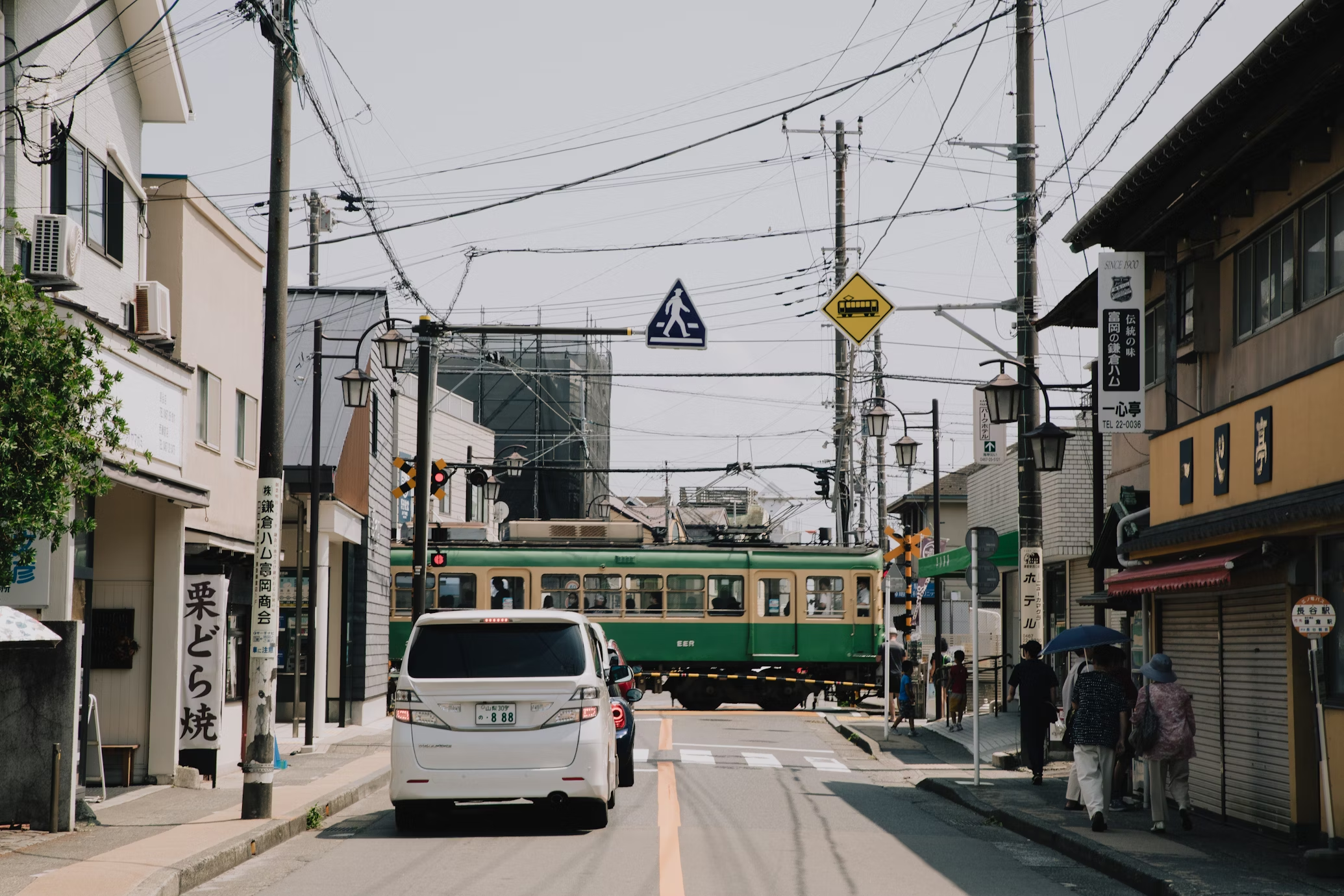
Japanese Road Signs
While major signs are bilingual, many local or rural road signs are in Japanese only. Understanding warning signs, parking rules, and road markings is essential to avoid accidents or fines.


Narrow Roads and Aggressive Driving
In cities and villages, roads are often extremely narrow. Oncoming cars may require you to pull over into tight spots. Japanese drivers also follow very strict etiquette—and breaking the “unspoken rules” (like not yielding properly) can cause frustration or danger.

Limited Parking
Parking in cities is expensive and scarce. You may spend more time looking for a legal spot than actually exploring. Illegally parked cars are often ticketed or towed quickly.

Strict Penalties for Accidents
Japan has a zero-tolerance policy on drinking and driving, and any traffic violation can lead to severe penalties. If you cause an accident—even a minor one—expect heavy fines and possible liability.

Foreign Drivers in Japan Are Over 5 Times More Likely to Cause Rental Car Accidents
According to a report by Japan’s Institute for Traffic Accident Research and Data Analysis (ITARDA), the accident rate for foreign tourists driving rental cars in Japan was 13.8 per 10,000 rental days between 2014 and 2018. In contrast, Japanese drivers had a significantly lower rate of just 2.5 per 10,000 rental days.
This means that foreign drivers are more than 5 times more likely to be involved in a traffic accident while driving a rental car in Japan.
Key reasons for this higher risk include:
- Lack of experience with Japan’s left-side driving
- Difficulty understanding Japanese traffic signs
- Narrow roads and unfamiliar traffic etiquette
- Reliance on unfamiliar GPS systems
Popular regions such as Okinawa, Hokkaido, and Nagano—where tourists often choose to drive—show particularly high rates of foreign-involved accidents. If you’re planning to rent a car in Japan as a visitor, it’s crucial to understand these risks and consider alternatives like hiring a car with a local driver.
Source: ITARDA Report No.132, 2020 – www.itarda.or.jp
So, Should You Drive in Japan?
If you’re staying in major cities like Tokyo or Osaka, public transportation is far more convenient and efficient. However, in cities like Kyoto, where the terrain is hilly and many tourist sites are not directly connected by train, getting around by bus can be time-consuming and confusing. In such cases, hiring a private car with a driver is highly recommended for both comfort and efficiency.
Renting a car might also be worthwhile if you’re exploring remote areas such as Hokkaido, the Japanese Alps, or Kyushu, where train access is limited and scenic drives are part of the experience.
Of course, for travelers who prefer maximum comfort, hiring a chauffeured vehicle can be a great option even in big cities—eliminating the stress of navigating, parking, and dealing with traffic rules in a foreign country.
Checklist: What You Need to Rent a Car in Japan as a U.S. Citizen
- ✅ Valid U.S. driver’s license
- ✅ International Driving Permit (IDP) based on 1949 Geneva Convention
- ✅ Passport
- ✅ Credit card for rental deposit
- ✅ Basic understanding of Japanese road rules
Final Thoughts
Yes, you can legally drive in Japan with a U.S. license—but only if you prepare properly. And even if you’re legally allowed, it doesn’t always mean it’s the best or safest choice. For many travelers, relying on trains, buses, or private car services with a local driver might offer a much more relaxing, enjoyable, and culturally immersive experience.